How to Prevent Frozen Pipes in Sunset Park Homes
August 8, 2026 · By Stop Plumbing
Winter temperatures in Brooklyn can change quickly. A mild afternoon may be followed by a windy night well below freezing, putting vulnerable plumbing at risk. Frozen pipes are more than an inconvenience: expanding ice can split a pipe or fitting, and the resulting leak may not appear until the pipe thaws.
In Sunset Park, older row houses, multifamily buildings, garden apartments, and renovated mixed-use properties can have plumbing in many different locations. Pipes may run through unheated basements, rear extensions, exterior walls, crawl spaces, or enclosed areas that receive little warm air. A few practical precautions can greatly reduce the chance of damage.
Know Which Pipes Are Most Vulnerable
Start by identifying water lines exposed to cold air. Pipes inside heated rooms are generally less likely to freeze, while pipes near drafts or uninsulated surfaces need closer attention.
- Pipes running along basement or cellar exterior walls
- Plumbing in garages, sheds, crawl spaces, and rear additions
- Water lines beneath kitchen or bathroom sinks on outside walls
- Pipes near broken windows, open vents, or gaps around utility penetrations
- Outdoor hose connections and lines serving yards or roof areas
- Plumbing in vacant apartments or rooms where radiators are turned off
Look for past warning signs, including water stains, patched pipe sections, unusually cold cabinets, or a faucet that slows during freezing weather. These clues can help you focus your prevention efforts.
Prepare Before Temperatures Drop
Insulate Exposed Pipes
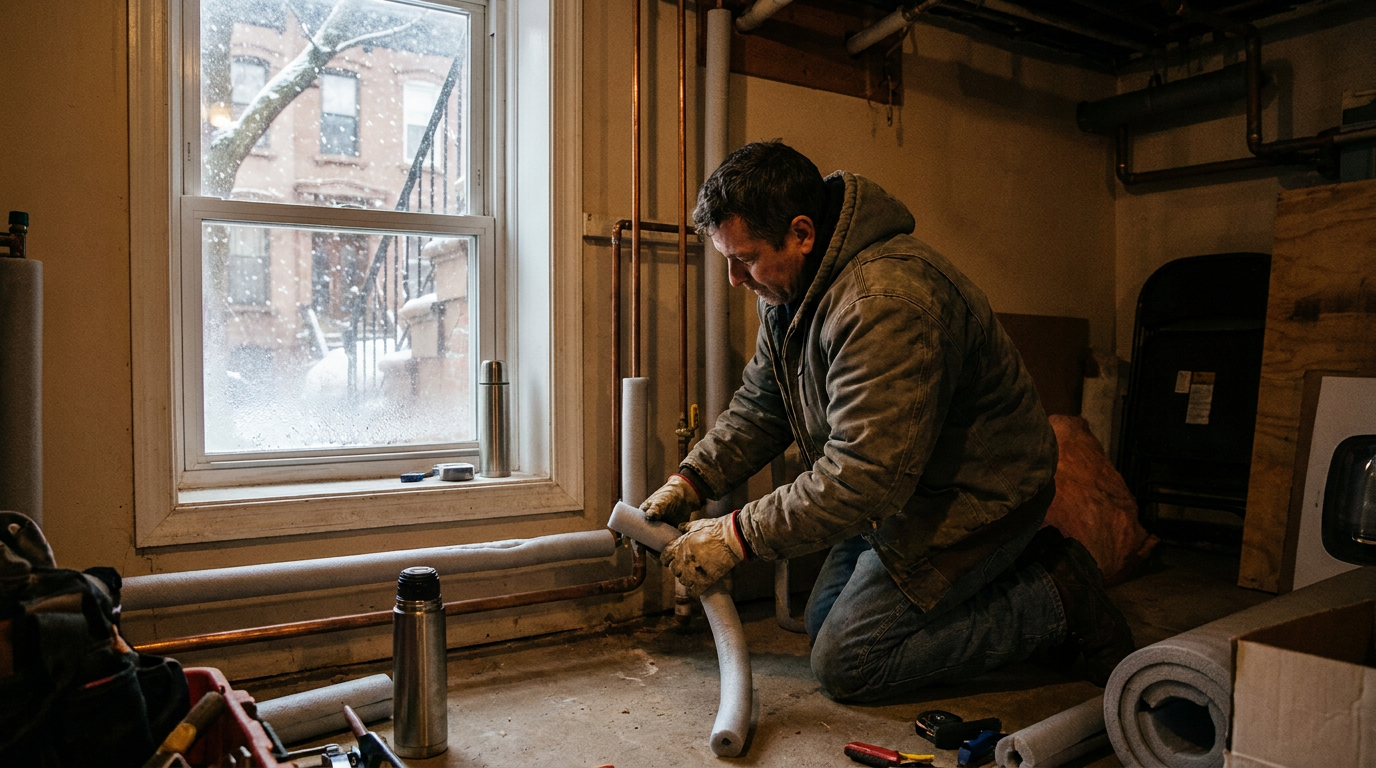
Foam pipe sleeves are an affordable way to protect accessible hot- and cold-water lines. Choose insulation that fits the pipe closely, cover elbows where possible, and secure the seams according to the product directions. Insulation slows heat loss, but it does not replace proper building heat or repairs to major drafts.
Seal Cold-Air Leaks
Cold moving air can freeze a pipe faster than still air. Check around basement windows, doors, dryer vents, cable openings, and places where pipes enter walls. Seal appropriate gaps with caulk or weatherstripping. Larger openings or fire-rated walls may require specific materials, so ask a qualified professional when you are unsure.
Disconnect Outdoor Hoses
Remove garden hoses before the first hard freeze. If the outdoor faucet has an interior shutoff valve, close it, open the exterior faucet, and drain the remaining water. Leave the exterior faucet in the recommended position for the fixture. A hose left connected can trap water and contribute to freezing inside the wall.
Learn the Main Water Shutoff Location
Every responsible adult in the home should know where the main water shutoff is and how to use it. In Sunset Park buildings, it may be near the front foundation wall, in the basement, beside the water meter, or in a utility area. Make sure it is accessible rather than blocked by storage. Do not force a valve that is corroded or stuck; have it inspected instead.
What to Do During a Cold Snap
- Maintain steady heat. Keep the building heated overnight and while residents are away. Avoid shutting off radiators in unused rooms if plumbing runs through those spaces.
- Open sink cabinet doors. This allows room air to circulate around pipes under kitchen and bathroom sinks, especially on exterior walls. Move cleaning products out of reach of children and pets first.
- Let a vulnerable faucet drip. During severe cold, a small trickle may help protect a known problem line. Use this as a temporary precaution, not as a substitute for insulation or repairs.
- Keep interior doors open. Airflow can prevent cold pockets in back rooms, basement areas, and enclosed spaces containing plumbing.
- Check vacant units. Landlords and property managers should arrange access and verify that heat is operating. Follow all applicable notice, access, and housing requirements.
If you leave home for several days, do not simply turn the heat off. Set it to a safe, steady temperature, confirm that the heating system is working, and ask someone to check the property during extreme weather. Smart temperature or leak sensors can provide useful alerts, but they should supplement regular inspections.
Signs That a Pipe May Be Frozen
A sudden loss of water at one faucet, very low pressure, frost on a visible pipe, or an unusual bulge can indicate freezing. You may also hear odd sounds when opening a tap. If several fixtures have no water, the issue could involve a larger section of plumbing or the building supply.
If you suspect a frozen pipe, act before it thaws on its own. A split may already be present, and melting ice can release water quickly.
How to Respond Safely
First, locate the main shutoff and be ready to close it. If you can identify the frozen section and it is intact and accessible, open the affected faucet and apply gentle warmth using a hair dryer on a low setting, a heating pad, or warm towels. Work gradually from the faucet side toward the frozen area so melting water has a path out.
Never use a torch, open flame, charcoal heater, or unattended space heater. These methods create serious fire, burn, and carbon monoxide hazards. Do not use electrical equipment near standing water. If the pipe is hidden inside a wall or ceiling, visibly damaged, or difficult to reach, call a licensed plumber.
If water begins leaking, shut off the main supply immediately. Keep people away from wet electrical fixtures, outlets, and appliances. If water is near electrical equipment, contact the appropriate emergency professional rather than entering the area.
Plan for a More Permanent Fix
A pipe that freezes once is likely to freeze again unless the underlying cause is corrected. Long-term solutions may include rerouting a water line, improving insulation, sealing a draft, adding safe heat to a plumbing area, or replacing a faulty exterior faucet. Older shutoff valves and weakened pipe sections may also need attention.
Stop Plumbing encourages Sunset Park property owners and residents to inspect vulnerable areas before the forecast turns severe. A short walk through the basement, kitchen, bathrooms, and outdoor connections can reveal small problems while they are still manageable. When the location of a pipe or the right repair is unclear, getting professional guidance early can help prevent a winter plumbing emergency.
Written by
Stop Plumbing
Home & Trade Services